

Creative Spirit
The first article in the first issue of Heron Dance profiled the work of filmmaker Frédéric Back. It seemed a perfect way to begin a publication about the search for beauty and meaning. I asked Frederic about the relationship between time, money and work of lasting impact:
“When we are born, we are born among a kind of beauty and richness. If people want to enjoy life, most of them go into nature, because when you go in nature, everything is beautiful. Every leaf of a tree is a work of art.
“But the search for beauty is a difficult road, often without remuneration. It is very demanding, takes a long time but has a really beneficial effect on people... It took Jean Giono 23 years to write, rethink and rewrite The Man Who Planted Trees. It ended up to be only 7 pages of typewritten text. If you work too fast… time is much more than money… time is the most precious thing… no money can buy time. That effort and elapse of time is crucial to the creation of all great art... It is fantastic to spend a long time creating a work of art. The search for beauty is without end. To make a kind of physic work you need time to reflect and rework. When you come to the end, you see the beginning differently.” (March 1995, Heron Dance)
Once, when visiting Frédéric at his home in Montreal, he gave me a copy of a magazine in which he was interviewed. He talked about the source of the idea for his Oscar Award-winning film, The Man Who Planted Trees:
One day, in the magazine Le Sauvage, I discovered Jean Giono’s story about the man who planted trees. I was profoundly moved by this text which expressed so well, so delicately, what so many people seek to discover through the teachings of others and through their own experiments. But disappointing results, impatient eagerness for the goal, for power and wealth, too often causes us to lose sight of what is necessary to make our lives beautiful and productive. This tale by Jean Giono was like the evening star that helps us to find our bearings, to see what is important. The meaning of the story can be found in the words: “Everyone searches desperately for happiness but the price that we must pay for it is generosity.”
. . .
In the section of the Journal Meditations binder that explores the use of meditation and journaling in understanding the hidden but important factors that affect our lives, I explore the use of guides:
Guides Imaginary and Real
Guides help us access our deeper levels of wisdom. They are people, living or dead, who you’ve known personally or encountered in books or in media, whom you most respect and admire, whose advice you would most value. You imagine conversations with them, ask them for advice. In your journal, you write down the answers you get back.
I have four such guides. During meditation, I ask them for advice. As often as not, the answers I get back are totally new and surprising to me — answers that had not occurred to me before. Often at first I find them challenging or even off putting. I often thought of one of them — myself twenty years from now — as Mr. Kill Joy. When considering some adventure or other, some exciting endeavor, he’d always counsel against it. “Go toward where you find peace,” he’d advise. I’d often ignore his view and create some mess or other.
Your guides might be people whose message you’ve studied and who have added to your life in a spiritual context like Gandhi or Jesus or the Buddha. The guides I turn to, I’ve realized in the course of writing Journaling as a tool in creating a life, are all quiet, thoughtful men who spend substantial amounts of time alone in nature. Men at peace with themselves, who live lives of profound appreciation of the natural world. Three of my guides are men I’ve encountered on canoe trips. We spent an evening together by some remote wilderness lake, shared a campfire and a meal, and then headed off in different directions in the morning, never to meet again.
Elzéard Bouffier
The guide I turn to most is Elzéard Bouffier, the shepherd in The Man Who Planted Trees. He plants tens of thousands of trees in a desolate valley in the remote foothills of the Alps in the first half of the 20th century. He’s a fictional character — one I’ve come to know well through the book by Jean Giono and the animated film made by Frédéric Back. Frédéric received an Oscar for the film.
These days, I find myself frequently asking myself, “If Elzéard Bouffier created a Substack, what would it say, suggest, propose?”
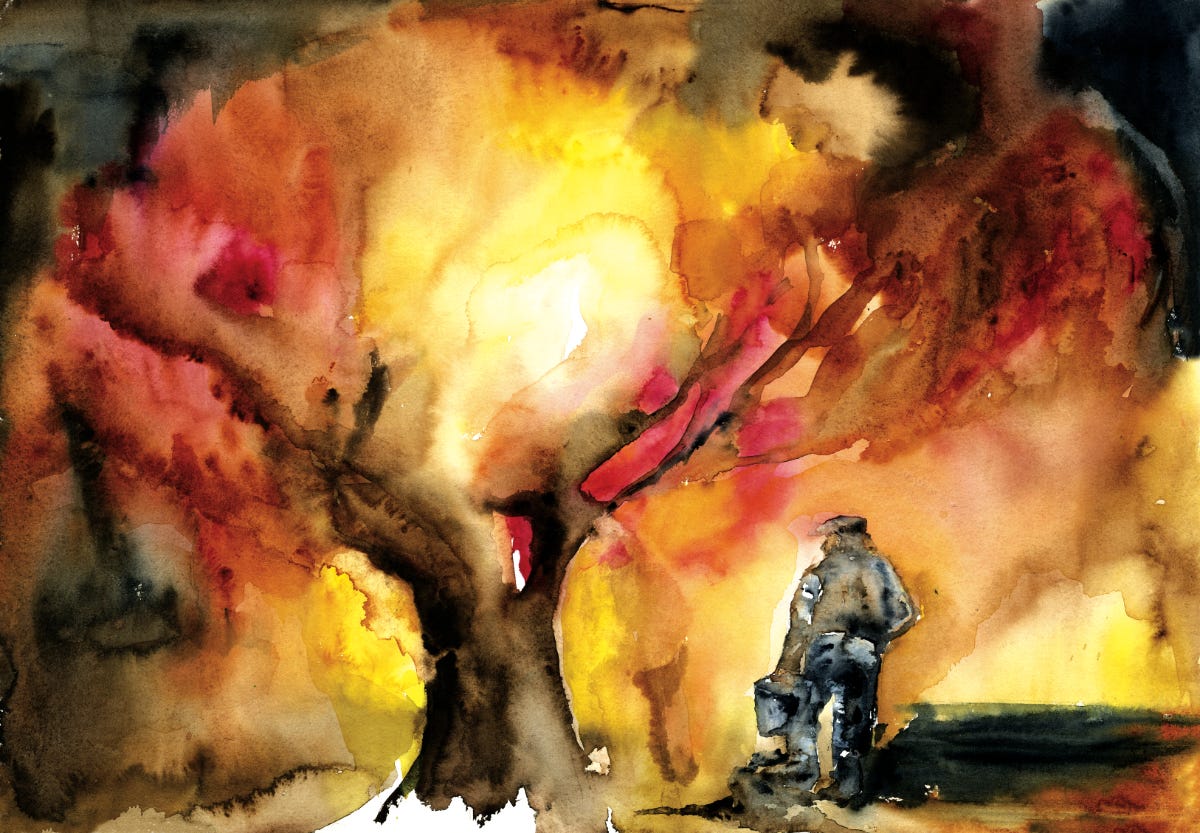
I went on to put together a book of my interviews of Frédéric and my watercolors. The book included a translation of Jean Giono’s book.
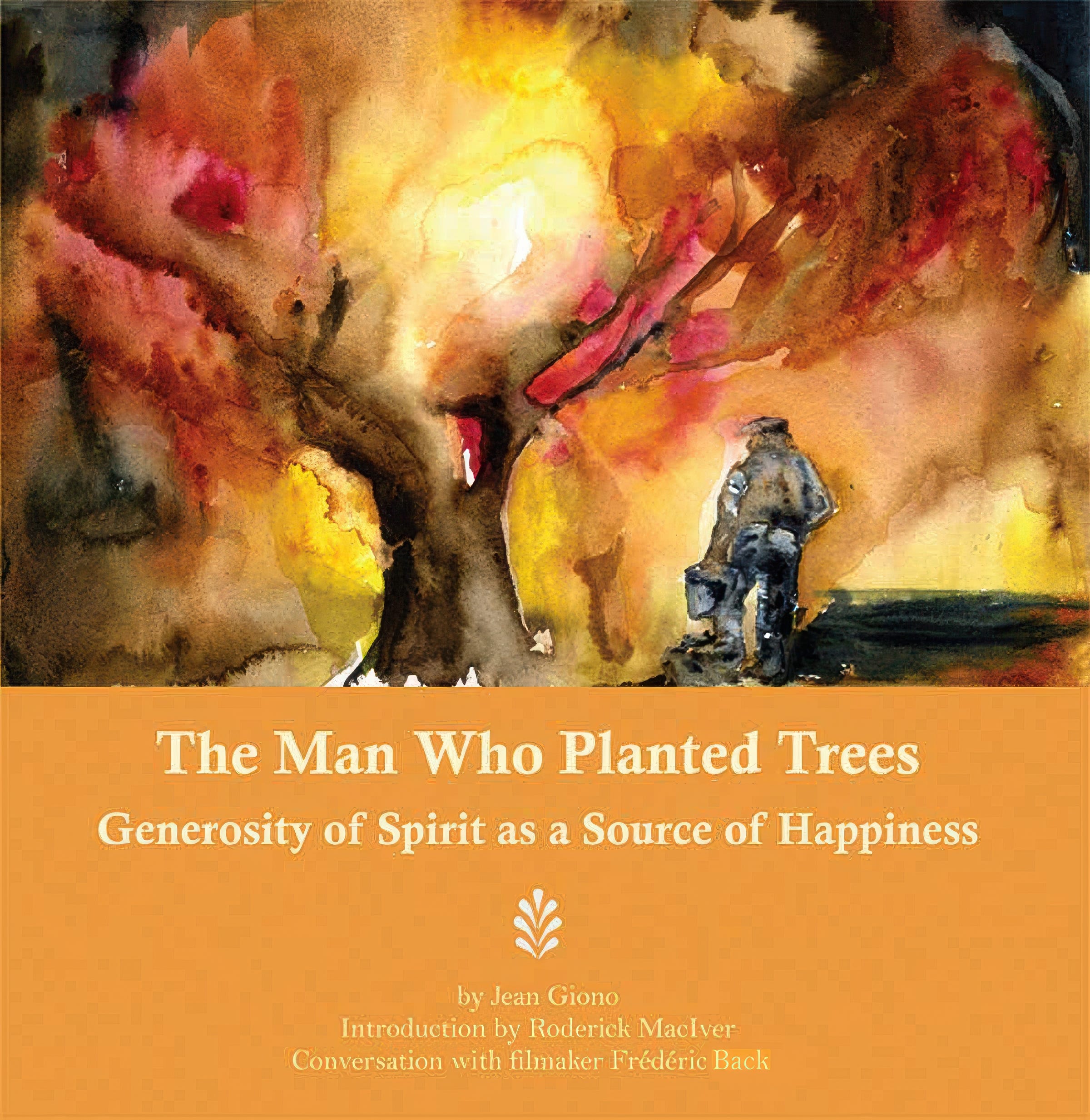
The book quickly sold out. Occasionally a used copy will come up on Amazon. (There’s one now, I noticed, offered for $200). Sometime in the next few months, the Heron Dance Press edition of the book will be offered as one of the sections of the Journal Meditations binder for $27.
You can read excerpts from my interviews of Frédéric Back on the Zen Mountain Journal website here.